WARNING: Major spoilers for The Blacklist through Season 8, Episode 22, “Konets,” with some discussion of revelations from the final two seasons.
I’m currently making my way through The Blacklist for the second time. Not an occasional episode here or there, but the entire series, beginning to end. And having just finished the Season 8 finale, “Konets,” I was reminded of something I felt the first time around.
This might be one of the greatest season finales I’ve ever watched.
Not series finales. Season finales.
There’s a distinction there, because “Konets” feels like it was written to close the book on eight years of television. If The Blacklist had ended right there, I honestly think I would have been satisfied.
Now, having already watched the show’s actual conclusion, I know there are two more seasons to come. And I enjoyed those seasons. But there’s something about “Konets” that makes it feel like the emotional ending the entire series had been building toward.
And man, what an ending.
Eight Seasons of Raymond Reddington
When The Blacklist premiered in 2013, it introduced us to one of television’s most fascinating characters: Raymond “Red” Reddington, played by the incomparable James Spader.
Here was a man who could walk into FBI headquarters, surrender himself, and somehow still control the room.
A criminal mastermind with impeccable taste, an endless supply of stories, a seemingly infinite network of contacts, and the ability to make even the most terrifying circumstances feel like an amusing inconvenience.
But beneath the tailored suits, expensive wine, and charming anecdotes was a mystery.
Who was Raymond Reddington, really?
And why was he so obsessed with protecting Elizabeth Keen?
For eight seasons, that question drove nearly everything. We followed the FBI task force as it hunted some of the world’s most dangerous criminals, often discovering that Reddington was somehow connected to all of them.
We watched alliances form, friendships collapse, enemies become allies, and countless people die because of secrets that Reddington refused to reveal.
And at the center of it all was Elizabeth Keen.
Liz started as a young FBI profiler whose life was turned upside down by Reddington’s arrival. Over time, she became increasingly consumed by discovering the truth about her past, her mother, and the man who seemed determined to control her future.
Unfortunately, she also became one of the most frustrating characters I’ve ever watched on television.
But we’ll get to that.
“Nachalo” Gives Us the Answers. “Konets” Makes Us Feel Them.
The penultimate episode, “Nachalo,” delivers an enormous amount of backstory.
We learn more about Katarina Rostova, the real Raymond Reddington, the elaborate deception surrounding his identity, and the extraordinary lengths taken to protect Liz.
Then Neville Townsend gets burned to a crisp, bringing one of the show’s most dangerous threats to an appropriately brutal end.
“Konets” picks up immediately afterward.
But instead of another hour of gunfights, conspiracies, and elaborate criminal operations, the show does something unexpected.
It slows down.
And that’s where the brilliance begins.
This episode is largely an emotional journey through everything these characters have experienced together.
Reddington knows his time is running out. His illness has taken its toll, and the danger surrounding Elizabeth hasn’t disappeared simply because Townsend is dead.
His solution is as outrageous as it is heartbreaking.
He wants Liz to kill him.
By publicly executing the legendary Raymond Reddington, she would establish herself as someone powerful enough to take control of his criminal empire. In theory, that reputation, combined with his organization and resources, would give her the protection she needs.
It’s a twisted version of a parent’s final sacrifice.
And the entire episode plays as though we’re preparing to say goodbye to Raymond Reddington.
The Goodbyes Are Almost Unbearable
Some of the most powerful moments in “Konets” are also the quietest.
Reddington and Liz spending time together.
Reddington watching Agnes.
The conversations in the park.
Liz reconnecting with members of the task force.
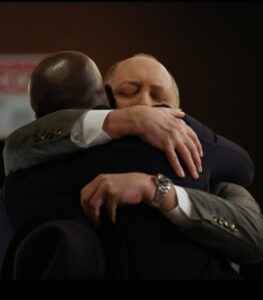
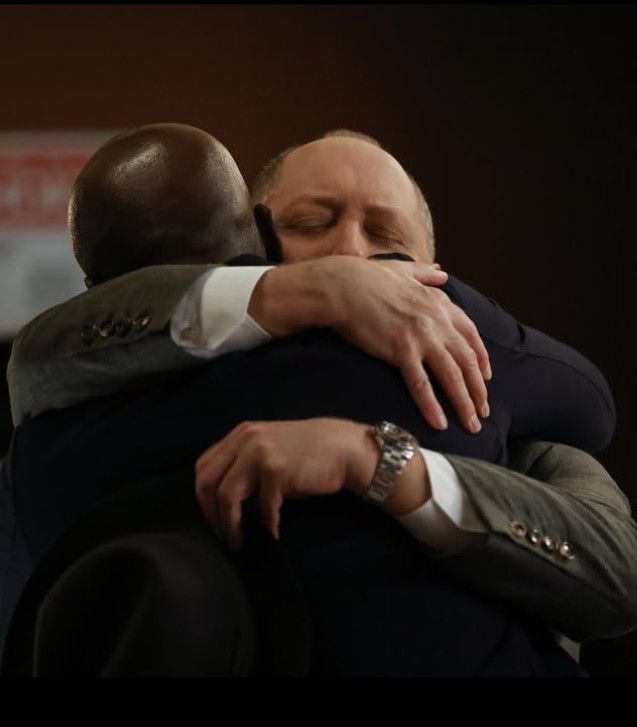
And, perhaps most moving of all, Reddington and Dembe reflecting on their lives together.
The relationship between Red and Dembe has always been one of the emotional foundations of this series. Dembe isn’t simply Reddington’s bodyguard or employee. He’s his closest friend, confidant, conscience, and family.
Watching these two men prepare for what they believe will be their final goodbye is devastating.
James Spader and Hisham Tawfiq don’t need grand speeches to communicate what these characters mean to one another.
Their history is written all over their faces.
As the episode continued, someone watching with me who had only loosely followed the series actually asked whether this was the series finale.
And I completely understood why.
Everything about it feels final.
The pacing. The conversations. The reunions. The emotional weight of seemingly ordinary moments.
It feels like the show is carefully putting everything back where it belongs before turning out the lights.
Except, of course, The Blacklist has never been particularly interested in giving us a peaceful ending.
Redarina: As Far as I’m Concerned, This Is the Answer
I know this is going to irritate some fans.
But after watching “Nachalo” and “Konets” again, I am more convinced than ever that Raymond Reddington is Katarina Rostova.
Not that he knew Katarina.
Not that he was simply protecting Katarina’s daughter on her behalf.
Raymond Reddington IS Katarina Rostova.
The infamous Redarina theory.
And I don’t just think it’s a clever fan theory anymore. I believe it’s the answer the series has been giving us all along.
Yes, I know the show never gives us a straightforward scene where Reddington looks into the camera and explicitly announces that he was Katarina.
But does it really need to?
At some point, storytelling doesn’t require a character to stand in front of the audience and explain what the writers have already shown us.
Look at everything we’ve learned.
The real Raymond Reddington died years earlier.
Katarina was being hunted by powerful enemies who would never stop searching for her.
Her daughter was in danger simply because of who her mother was.
An elaborate transformation took place, creating the Reddington identity we’ve followed for eight seasons.
And an enormous criminal intelligence network was built around one overriding purpose: keeping Elizabeth safe.
Then look at Reddington’s relationship with Liz.
The extraordinary lengths he goes to protect her. The secrets he refuses to reveal, even when telling the truth might save him from her hatred. His intimate knowledge of Katarina’s life. The guilt. The sacrifice. The unconditional love.
What other explanation makes all of that fit together?
For me, there isn’t one.
Katarina Rostova became Raymond Reddington to protect her daughter. Period.
That’s the story I believe The Blacklist told us.
And “Konets,” particularly its final moments, comes as close to confirming it as television can without having someone explicitly say the words.
The tragedy is that the very secret intended to protect Elizabeth became the obsession that ultimately destroyed her.
The Letter Changes Everything
There’s another part of this story that I feel strongly about.
The letter.
Reddington possesses a letter from Katarina that promises to answer Elizabeth’s questions about his identity. But there’s a catch: Liz cannot read it until after she kills him.
Red even explains that if she knows the truth beforehand, she won’t be able to pull the trigger.
Now think about that statement.
Why wouldn’t she?
After everything Liz has done, after all the threats, betrayals, and attempts to destroy Reddington, what revelation could possibly stop her?
I believe the answer is obvious.
Because she would discover that the man standing in front of her was actually her mother.
And I firmly believe Dembe allowed Liz to read that letter before the planned execution.
Season 9 later confirms that Dembe showed Liz the letter before her death. For me, that revelation makes the final confrontation in “Konets” even more meaningful.
When Liz raises her gun and looks at Reddington, she can’t do it.
I don’t think that’s simply because she’s suddenly developed a conscience or remembered that she loves him.
I believe she finally understands who he is.
For the first time, she sees the person behind the identity.
The person who sacrificed everything for her.
The mother she’s spent eight seasons trying to find.
And she cannot kill that person.
To me, that’s the emotional answer to the mystery, whether or not the show ever delivers the explicit verbal confirmation some viewers demand.
Elizabeth Keen: The Most Frustrating Person in the Room
Now comes the part where I probably upset a few more people.
I have never particularly liked Elizabeth Keen.
And that has nothing to do with Megan Boone‘s ability as an actress.
It’s the character.
Over eight seasons, Liz makes an astonishing number of decisions that seem to defy common sense.
She demands answers, receives explanations, refuses to believe them, trusts people she absolutely shouldn’t trust, betrays people who repeatedly save her life, and then acts shocked when everything falls apart.
There are times when she feels less like a trained FBI profiler and more like an over-the-top cartoon character whose only purpose is to create another crisis.
I understand why the writers needed her to keep pushing. Without Liz’s obsession, much of the central mystery disappears.
But there’s a point where the character’s behavior becomes exhausting.
And the irony of “Konets” is that after all her searching, all her anger, and all the destruction, the truth is finally within reach.
She has the opportunity to understand everything.
And then she’s gone.
Killed by Elias VanDyke, one of Townsend’s surviving loyalists, before she can begin the life Reddington had envisioned for her.
For all the ridiculous decisions Liz made throughout the series, I still didn’t want her story to end that way.
Which says something about how powerful this finale really is.
James Spader Makes the Ending Devastating
I don’t know how many actors could have carried this character for ten seasons the way James Spader did.
His portrayal of Raymond Reddington is extraordinary.
Spader can make Red charming, terrifying, hilarious, sentimental, and utterly ruthless, sometimes within the same conversation.
But “Konets” gives us something different.
A man who has finally accepted that he cannot control everything.
A man who has spent decades building an empire, manipulating governments, eliminating enemies, and arranging the world around one central purpose.
Protect Elizabeth.
And when the moment comes, he fails.
The final sequence is heartbreaking.
Liz is shot. Reddington kills VanDyke. And then he rushes to the person he has spent his entire life trying to save.
As Elizabeth dies in his arms, the show takes us through a montage of memories, connecting her life, her childhood, Katarina, and Reddington.
It’s beautifully edited, emotionally overwhelming television.
And Spader’s performance makes it almost impossible to watch without feeling something.
All the power in the world.
All the money.
All the intelligence.
All the connections.
And none of it can save the person who mattered most.
That’s the real ending of “Konets.”
Not the death of Elizabeth Keen.
The complete destruction of Raymond Reddington’s reason for living.
Behind the Scenes: Megan Boone, James Spader, and Two More Seasons
Of course, television doesn’t exist in a vacuum.
Megan Boone’s departure after eight seasons fundamentally changed The Blacklist.
And I have to admit, the behind-the-scenes story has always bothered me.
There has been plenty of speculation about Boone’s departure, including reported tensions surrounding compensation and whether she believed she deserved a salary closer to that of James Spader.
I don’t know exactly what happened behind closed doors, and I won’t pretend that those rumors have been conclusively established.
But I do believe that whatever negotiations and creative decisions took place, losing one of the show’s two central characters changed the series forever.
And then there’s James Spader.
One of the more interesting pieces of speculation surrounding the final years of The Blacklist is the idea that Spader, recognizing how many people depended on the production for their livelihoods, may have helped advocate for a more deliberate conclusion rather than an abrupt ending.
I want to be clear that I haven’t seen definitive confirmation that Spader personally negotiated or secured the final two seasons for the cast and crew.
But I find the possibility fascinating.
Think about the people who worked on this show.
Not just the actors whose faces we recognize, but the camera operators, grips, lighting technicians, makeup artists, wardrobe departments, set designers, drivers, production assistants, and countless others who helped bring The Blacklist to life.
For many of those people, a television series isn’t simply entertainment. It’s their livelihood.
And after eight seasons, it’s also a community.
The possibility that Spader might have used some of his influence to help give that community a longer runway, allowing people time to prepare for the end rather than suddenly scrambling for their next job, is something I genuinely hope is true.
It would certainly fit the respect I’ve developed for him as a performer.
What we do know is that The Blacklist continued for two additional seasons after Boone’s departure, eventually concluding with Season 10.
That gave the production time to tell a different kind of story and bring the series to its eventual conclusion.
And while I enjoyed those final two seasons, the dynamic was never quite the same.
How could it be?
The entire premise had been built around the relationship between Raymond Reddington and Elizabeth Keen.
Once that relationship ended, the show had to become something different.
Could “Konets” Have Been the Series Finale?
Absolutely.
In fact, I would argue that it might have been one of the most memorable series finales in television history had the show stopped right there.
Think about what it accomplishes.
It brings the central mystery to the edge of resolution.
It gives us a powerful explanation for Reddington’s life and motivations.
It allows the characters to reflect on everything they’ve experienced.
It delivers heartbreaking goodbyes.
And then, in the final moments, it turns everything upside down.
Instead of Reddington sacrificing himself to save Elizabeth, Elizabeth dies and Reddington is left to live with the consequences.
That’s a brutal ending.
But it’s also an incredibly fitting one for a series about secrets, sacrifice, and the terrible price of trying to control the lives of people we love.
Would I have wanted more answers?
Sure.
Would I have preferred Elizabeth to survive long enough to understand the sacrifices made for her?
Probably.
But great television doesn’t always give us the ending we want.
Sometimes it gives us the ending we can’t forget.
One of Television’s Finest Finales
I’ve watched a lot of television.
I’ve seen great series finales, disappointing finales, shocking cliffhangers, and shows that simply didn’t know when to end.
But very few episodes have affected me the way “Konets” did.
And what’s remarkable is that it affected me just as much the second time.
Maybe even more.
Knowing what comes afterward allowed me to appreciate the episode without worrying about what the next season might bring.
I could simply experience the storytelling.
The performances.
The music.
The goodbyes.
And that absolutely crushing final sequence.
For eight seasons, The Blacklist asked us one question.
Who is Raymond Reddington?
And for me, “Konets” finally answers it.
Raymond Reddington is Katarina Rostova.
A mother who sacrificed her identity, her freedom, and ultimately her entire life as she knew it to protect her daughter.
And despite everything she built, everyone she manipulated, and every enemy she eliminated, she couldn’t save Elizabeth in the end.
That’s what makes this episode so devastating.
The entire story was about a mother’s love, disguised as the story of a criminal mastermind.
“Konets” isn’t just one of the greatest season finales I’ve ever seen. I’d put it up against some of the greatest series finales ever made.
And James Spader deserves an enormous amount of credit for making it unforgettable.